Conference Paper Essay
Mia Doreen George
Professor Meaks
ENGL 21001-R
CCNY: S-209
4/13/26
Introduction: I approached this piece with the need, and want, to make my anger heard. While I kept personal self out of the essay to keep it contained to the general society, this piece was deeply personal to me as someone who has worked so hard to alchemize my anger into gentleness. I saw myself in Rudo and wanted to use this assignment as a chance to expand on that, as well as be a voice for those whose anger has constantly been misunderstood. In the future, I may like to add more outside peer reviewed evidence. This is the final version, I altered some of the sentences to be more detailed to the Gachiakuta storyline.
Conference Paper:
Has your anger ever blinded you? How do you treat others blinded by such an emotion?
In ‘How Anger Works’ by Sznycer, Daniel ; Sell, Aaron ; Dumont, Alexandre, it is said that: “They believe that anger is elicited by an offense; that anger has physiological effects (e.g., heat, agitation); that one can try, but fail, to control one’s anger (as if anger were a hot fluid in a pressurized container);”
In my paper today, I will be exploring and challenging this – the perception of anger, what anger can really be construed to be, and what we can do with it. I will be doing this using my favorite anime, Gachiakuta.
Gachiakuta reminds its viewer that anger is not an enemy challenging our morality, but rather a tool we can fashion to our advantage.
Before I get too ahead of myself, let me ask you all a question first. What would your response be if I asked you to give your anger a shape? May it be thorny, or round, or melted, or a set of bars? How does it move? Slow or fast? Have you ever been demonized for it by those around you, or even by yourself? Finally, do you feel like your anger sometimes makes you a bad person, or alters you negatively? What rips at your stitches?
In “METABOLIZING ANGER: A TANTRIC BUDDHIST SOLUTION TO THE PROBLEM OF MORAL ANGER” by McRae, Emily, written 2015, she says: “ One of the main obstacles to thinking clearly about the morality of anger is that we tend to have two competing intuitions: we think that the effects of anger—for both self and others—are often bad, destroying both our relationships and our peace of mind(…)” McRae helps to illustrate a part of the perception of anger, and how it has changed from a mere emotion into a symbol of the ill-intentioned.
Merriem Webster describes anger as “a strong feeling of displeasure and usually of antagonism”. A lot of the time anger is viewed on a one dimensional plane, unlike other emotions we have. In Western culture, anger is typically posed to be an unhealthy thing that inherently causes negative and hostile reactions in the one experiencing it. It is said to be something that makes the person experiencing it lose themselves in the act of trying to prove something or satisfy their rage. To turn one into an antagonist. In terms of being angry yourself, it is typical for people to only see the anger and to lose their sights on you as a person – shaping you in their mind’s eye into an antagonist.
While the reaction of anger can be out of fear, opposition, misunderstanding, or something else entirely – it is a reaction that can lead to the person withholding their anger later in their life, leading to that anger leaking out in other harmful ways.
Anger, when held in, has been proven to weaken immunity, cause digestive issues, and cause hypertension. Looking at the other side of the coin, we see repressed anger causing avoidance issues, outbursts, panic attacks, and can also lead to an influx in risk for one exhibiting abusive behavior as they slowly lose more and more of their ability to express their anger in a healthy manner after not having it be received well before, or due to hurting others before.
The human brain will always be focused on survival first and foremost, before anything else. All of our emotions fall into this as well. Including anger. The nature of anger lies in protection. Anger usually blankets another primary emotion; such as sadness, hurt, fear, or confusion. Typically, anger is a mine that must be dug by either the person experiencing it or someone else who may be able to find the true heart of it, and unfold it into the three, or sometimes four, dimensional complex creature it is.
Anger exhibits the same tendencies other emotions commonly do whether it be dramatizations, loudness, high in energy, and sometimes a feeling of suffocation. These are all things that can come along with happiness, sadness, fear, and many other common emotions we feel on a daily basis.
Humans are complex, confusing, and harrowing creatures. Far too complex to be appointed the title of protagonist or antagonist. We understand more and less than we think we do simultaneously, we often reject the remembrance of our own humanity and animality in favor of cruelties like damaging our planet, damaging each other, and damaging ourselves. It is imperative you interrogate yourself pertaining to the cruelties you portray, both unto yourself and unto others. It is imperative you recall humanity even in moments that paint your surroundings red.
Anger, however fear inducing, and perhaps unpredictable – can be utilized. It can be alchemized, constructed, and shaped to be a tool of growth rather than one of ache. It can, like other emotions, just be a part of you that isn’t out to hurt you or others, but is simply there to armor you in preparation for the things that are actually out to hurt you.
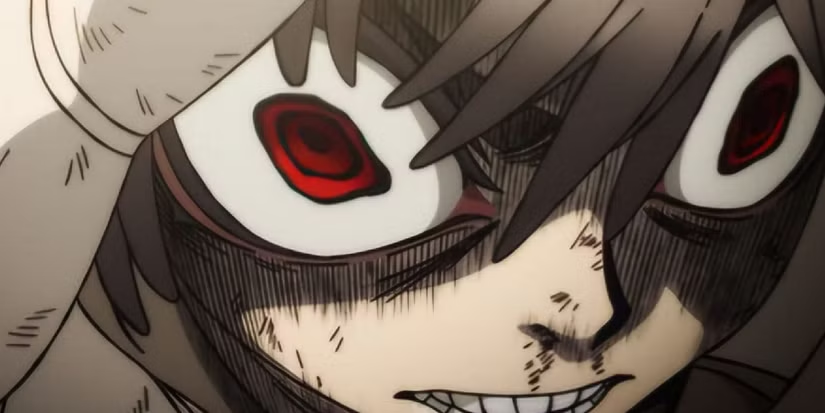
If we want to talk about anger, and how we can use it. We can talk about Gachiakuta. I remember watching Gachiakuta and subconsciously focusing on the 15 year old Rudo Surebrec specifically. Gachiakuta is an anime surrounding the main character Rudo, who is discarded, like trash, into a wasteland just beneath his home. There his immediate focus is to get back home to get revenge on those who discarded him. However, in the wasteland he meets an eccentric group of characters who guide the adolescent into becoming stronger in all aspects.
The series, throughout its duration, quickly shifts from a cool action anime, into a series of depth surrounding grief, turmoil, those discarded, and, of course, anger; not only in its many forms, but also on the guidance of it and how it can sour when left unhealed. Rudo is an interesting character for many reasons, but mostly because of his anger.
Rudo throughout his entire life was mistreated by the society he was born into, and grew rage toward the systemic oppression on him and his loved ones. Growing up with bullying, struggling with being different, and disregarded consistently, Rudo’s anger quickly became a central emotion to his being; clenching his fist became more pronounced in his nature than crying or even smiling.
Rudo’s anger, both a viable shield and poison, remains to be a sensitive topic for him. He blames his anger for causing him to be susceptible to outbursts, more penalizations, and a negative reputation for himself and loved ones. Rudo, at this point, lacked the self compassion to give himself grace or to feed himself positivity due to being taught his entire life that he was inherently a bad kid because of his lower class and because of his father being perceived as a bad person as well. He is told he is trash, and is treated like it, so he beings identifying with it.
In ‘Self‐compassion and emotional regulation as predictors of social anxiety’ by Bates, Glen W. ; Elphinstone, Bradley ; Whitehead, Richard ; 2020, we see the quote: “A belief in a flawed self may also explain the failure of socially anxious individuals to incorporate positive information about the self.”
Later in the story when Rudo is punished by that same system, that did nothing but neglect him, and is thrown to a wasteland below, he feels like the same garbage the elite abused. Another center piece of the story is the relationship people have with their objects or trash. Some objects deserve a second life, and some could’ve been recycled. Rudo links himself to the trash he is amongst – something scrapped with misconception without being given another chance to prove itself. From there Rudo wants revenge on those who sullied him by throwing him away far before he ever ended up in the wasteland. “You’ve got eyes and ears, but you don’t look or listen! You’re just useless lumps! Every last one of you.” Rudo says.
We, as viewers, see Rudo’s anger fuel his motivations, his survival, and mindset as he works his way through the wasteland–meeting new characters that work to try to guide and care for him, along with other more dangerous characters who have dangerous intentions.
In the anime, when a girl named Amo uses her powers to manipulate his memories of his lost loved ones, Rudo punches her for toying with him for her own gain. The hits in the scene are constructed in such a way that the viewers almost feels like Rudo or Amo – the punches landing in the otherwise silent room filled with Rudo’s shocked peers. Rudo is taken aside by the character Enjin and they share a valuable conversation.
Rudo: “The whole time I was in the Sphere, I always had to take it. No matter what people said to me, I was told to hold my temper. To endure it. But when they sent me to the Ground, I realized if I tried to hold it in, I’d lose. And just now I realized that I’ve gone back to how I was.
The version of me who just hit the people around me with all the darkness welling up inside me. After all the crap I’ve been through , I haven’t really changed. Above or below, any growth I think I’ve gone through is just an illusion. I’m still a little brat!”
Enjin: “(…) The fact that I can’t hide that stuff is one of my bad traits. Even adults have a ton of crap we need to grow out of. So if you want to grow, that “realization” is the thing you really need. I was brought face to face with my faults ages ago. You realized yours on your own. Which means…we’ve got nowhere to go but up!”
Through this exchange of words, we see what Rudo’s anger has been shielding. His anger has been blanketing fears, insecurities, and it has been a push to boost his rates of survival in the wasteland he’s now in. He went through the trials of being told his anger was a gun, a weapon that could only cause harm to him, and those around him; something that needed to be tucked away no matter what poked or prodded at it. However, in the wasteland he allowed it to go off, without finding a middle ground of control over it.
Rudo attributes his outburst to a lack of growth. His upbringing, surrounded by bullies and neglect, taught him that anger was inherently bad, and made the person exhibiting it less valuable. However, Rudo doesn’t realize that anger is not simply anger. Punching Amo was a response. Rudo, who had been manipulated, put in a position of intense fear, made to relive his traumas, and used by her for selfish gain, was trying to reassure his brain that he could take his power back. His rage, a response to this hurt, took away his rational mind – leading to the hits. It wasn’t right what he did, but it made sense. It doesn’t excuse what he did, or absolve him of responsibility, but it provides an explanation.
Rudo is self aware and recognizes his flaws, and wants to grow and change. Enjin also recognizes his own flaws as an adult, and reassures Rudo that once they’re at rock bottom, and understand where they are, there is nowhere else to go but up. There is only understanding, taking responsibility, self forgiveness, and growth left to turn to.
Rudo apologizes to Amo and Amo, another traumatized kid trying to figure herself out, accepts it. Later in the anime through trial and tribulation, learning from mistakes, and communicating in a way he’s never done before, Rudo finds he wants to focus on alchemizing his anger to be able to release it all at once while fighting his enemies. In ‘Moving Beyond Fight and Flight: A Contingent Model of How the Emotional Regulation of Anger and Fear Sparks Proactivity’ by Lebel, R. David ; 2017 we see the statement: “(…) When fear is directed away from flight and toward increased protective effort (fight).” This brings the begging question of what is it you want to fight for, and what are you running from now?
There’s no doubt that anger can be a scary emotion to experience and witness. It is mostly loud, even if it comes without sound. It has a higher risk of being negative than other emotions, and it can make it seem like the person experiencing it is a completely different individual sometimes. However, when used in a healthy manner anger doesn’t have to look like its stereotype. Rather than a weapon of destruction, it can be a tool of great help.
When dealing with an angry individual, try to handle the situation with empathy – whatever empathy may look like to you personally. Meet them on an entirely human level and try to understand them. A lot of the time, all someone needs is for someone else to listen to them without judgement. When the underbelly of anger is handled with proper care, typically the anger itself will dissipate when it realizes that what it had been protecting or shielding is being taken care of.
Now, of course, anger doesn’t look the same on everyone. If a situation is too violent or cruel, then your safety is the priority, and de-escalating or leaving the situation all together is advised. Some anger isn’t justified, some anger is used as an abusive tactic. In that case, if it is safe enough to do so, prioritize education in the form of getting the person to be conscious of and understand the harm they are causing.
If they continue a harmful pattern of behavior without any sign of change or, especially, wanting to change, then it is up to them to utilize any tools you’ve given them, and it is up to you to prioritize yourself and leave if it is possible and safe to do so.
Merriam Webster defines ‘Alchemy’ as “a power or process that changes or transforms something in a mysterious or impressive way”. As illustrated by Rudo, anger doesn’t have to stay in one form, especially if the person that has been experiencing it is unhappy with what they’re perpetrating. There is no limit to the amount of growth a person can experience and enact on themself. A big misconception is that growth is something to be waited for passively, when in reality growth is something one must work hard to gain and embody.
Rudo took the time to unlearn some of the negative misconceptions placed on him, his environment, his character, and, of course, his anger. He also took the time to place that anger into something that would benefit him rather than sadden him retrospectively. He placed it into becoming a better opponent toward his enemies–letting his anger out in a healthier way. He opened himself up to being vulnerable, as well as humble, enough to receive help from his peers. He allowed himself the right to see a brighter future rather than the one wrongfully placed on him by classism, bullies, and even himself. ‘Humility & Anger’; April 2025, by Harmon-Jones, Eddie supports my point in stating: “Humility is a complex psychological variable comprised of several components: openness to new ideas; willingness and ability to accurately assess oneself; ability to acknowledge one’s mistakes; relatively low level of self-focus (being unselfish and other-oriented); an ability to celebrate others’ successes and affiliate with others; Furthermore, humility may reduce anger because it is associated with several components that oppose anger.”
These are all lessons to be taken from ‘Gachiakuta’ as well as a remembrance to be served with a reverence and knowledge that the limit does not, and has never existed. Anger can be a thing, not of fear, but rather a thing of catalyst that can be the signal that it may be time to transmute any big feelings into a new path for yourself. Sometimes the door is only closed because it is locked, and sometimes you may find the key right in your back pocket. It is all in you, as well as up to you. I plan on doing more self reflective research with this anger analysis, as I still have questions regarding all the many forms anger comes in. I think many areas such as sciences, biology, health, and psychology should also study anger more, as more than just anger itself.
Mia Doreen George
Works Cited:
“METABOLIZING ANGER: A TANTRIC BUDDHIST SOLUTION TO THE PROBLEM OF MORAL ANGER” by McRae, Emily, written 2015
‘Humility & Anger’; April 2025, by Harmon-Jones, Eddie.
How Anger Works’ by Sznycer, Daniel ; Sell, Aaron ; Dumont, Alexandre ; 2022.
‘Self‐compassion and emotional regulation as predictors of social anxiety’ by Bates, Glen W. ; Elphinstone, Bradley ; Whitehead, Richard ; 2020.
‘Moving Beyond Fight and Flight: A Contingent Model of How the Emotional Regulation of Anger and Fear Sparks Proactivity’ by Lebel, R. David ; 2017.
“Anger.” Merriam-Webster.com. Merriam-Webster, 2026. Accessed: April 13th 2026.
https://www.merriam-webster.com/dictionary/anger
‘Gachiakuta’. Produced by Bones Film, Crunchyroll, July 6th 2025.

